
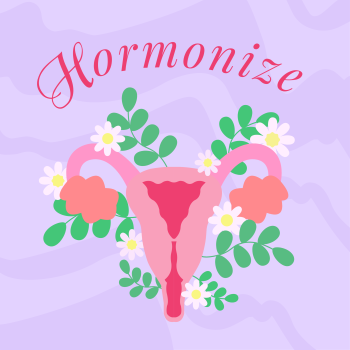
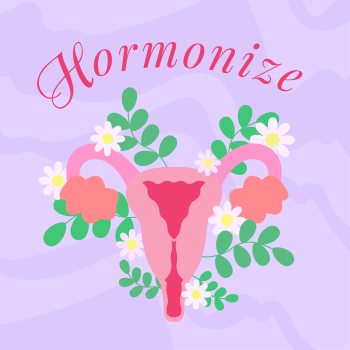
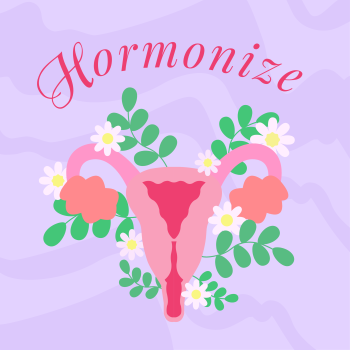
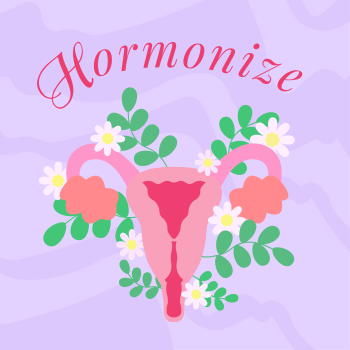



Throughout a menstruator’s life, there is a period of about 40 years in which their body will cyclically menstruate, from Menarche; the first menstruation between 11 and 16 years old, to Menopause; the last menstruation at around 50 years old. Thus, a menstruator must learn to know their body from the Ovary: organs that produce eggs and sex hormones; Fallopian tubes: a slender tube through which eggs pass from the ovaries to the uterus; the uterus or uterine cavity: a muscular organ in which the fertilised ovum implants and develops during prenatal development; The endometrium: the uterine cavity lining; the cervix: the lower, narrow end of the uterus; to the vagina: the tube connecting the vulva and the cervix.
But it is also important to get to know the external parts as well, starting from the vulva: the set of external female genitals; the pubis: the mons pubis which is a pad of fatty tissue that covers the pubic bone; the clitoris: a primary source of sexual pleasure organs; the vagina: the opening; the urethra: the tube that connects the urinary bladder; to the anus: the opening where the gastrointestinal tube tract ends. Attention though, these last two do not belong to the reproductive organs.
Usually, the menstrual cycle averages 28 days, starting with the first day of menstruation. Bleeding occurs for around the first 5 days, what is called menstruation! At this time in the ovaries, a new ovulum starts it’s maturation, to be released on the 14th day, what is called ovulation! At the same time the uterine epithelium grows, preparing in the case that a fecundation happens. If so, no menstruation occurs, as this tissue will feed the embryo. If not, it will be released, and a new cycle begins; a process controlled by two types of hormones: Oestrogen and Progesterone. They are produced by the ovaries and work together to assure the development of sexual characteristics during puberty and to ensure fertility, egg release and pregnancy maintenance, when it occurs. These hormones are also responsible for changes in mood and behaviours.


The content of terrampacis.org domain is controlled and managed by TERRAM PACIS based at Edvard Storms gate 2, 0166 Oslo. We value your privacy and the privacy of the information we collect from you when using our websites.
This privacy notice was updated on 10.02.2026. Therefore, if you decide to use our websites and the provided services, it implies that you agreed with this privacy notice. Otherwise, please do not use our websites and the provided services.
When we make new amendments to this privacy notice, the amended notice is posted hereon. Therefore, the continued use of our websites and provided services, implies that you agreed with the new amendments.
We particularly collect information from and about you when you: make a donation, register an account or register as a partner, and when you subscribe to our newsletter. To delete your own data, please go to Delete my account or unsubscribe from our newsletter.
We use cookies on this website. It is a piece of data stored on your hard drive to help us improve your access and your use of our websites' services. If you do not accept this, please do not use our websites and the provided services.
We use reasonable and up to date security methods to protect all the data we collect from you and held by us. However, on the Internet, we cannot guarantee information's absolute security.
Where reasonable we challenge any legal processes seeking access to any data collected from you and held by us. Though in some cases, we may be unable to resist such legal proceedings. In such events, you will immediately be notified.
This privacy notice outlines our information processing practices in relation to you and your personal data and applies when we collect and process personal data from you through our websites or mobile applications. As a user, you have the absolute rights on your personal data and you are free to ask us to update or delete your personal data at any time via info@terrampacis.org.